Quote · Added 10 February 2026
When words leave off, music begins.
Heinrich HeineThe Life & Letters of Peter Ilich Tchaikovsky, 1878
No ratings yet
Filed undermusic·expression·emotion
Quote · Added 10 February 2026
Filed undermusic·expression·emotion
There's a particular frustration that comes when you're trying to explain something that matters to you—a feeling, a memory, a moment—and language just crumbles. You reach for the right words and they aren't there. What Heine understood is that this isn't a failure. It's actually a signal that something genuine is trying to emerge, something too textured or too large for ordinary sentences to hold.
Music exists in that exact gap. A melody can carry grief that would take paragraphs to describe, or joy that sounds cheap the moment you try to define it. Think about how a song can make you feel understood when conversation never could, or how a few notes can resurrect an entire period of your life more vividly than any story could. This is why people cry at concerts but rarely cry at lectures.
The real insight isn't that music is some mystical alternative to language. It's that some truths about being human are simply too big for words alone. They need rhythm, tone, repetition, silence—the things music does naturally. In a world obsessed with explaining everything, articulating our position, proving our point with words, Heine reminds us that knowing when to stop talking might be when real communication actually begins.
1797–1856·lived 58 years
Heinrich Heine was a German poet, essayist, and literary critic of the 19th century. Known for his lyrical poetry and sharp wit, Heine's works often carried political and social commentary, making him a key figure of German Romanticism. His collections of poems, such as "Buch der Lieder," remain influential in German literature.
Also by Heinrich Heine
God will forgive me. It's his job.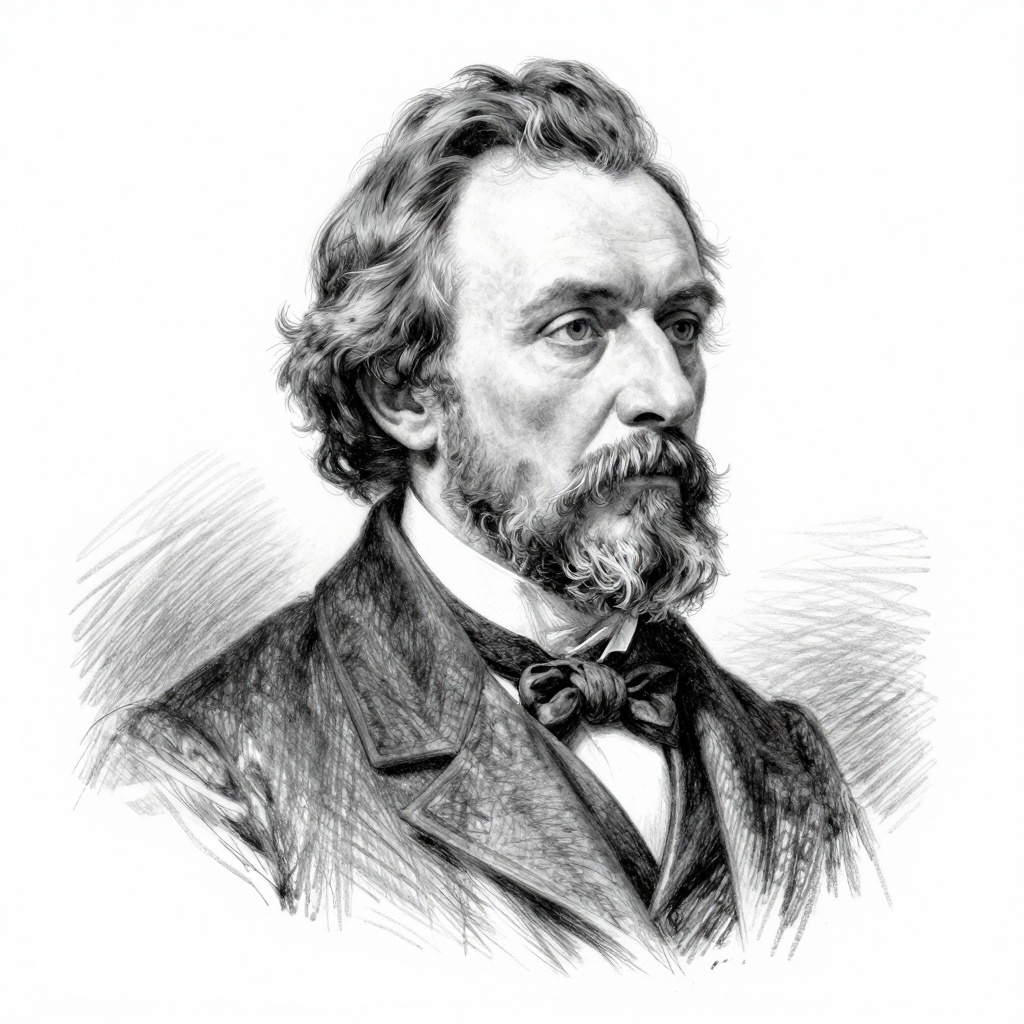
Comments