Quote · Added 14 October 2023
Great men are like eagles, and build their nest on some lofty solitude.
Arthur SchopenhauerParerga and Paralipomena, Vol. 1, p. 200, 1851
Quote · Added 14 October 2023
There's something counterintuitive here that stops us in our tracks. We live in an age obsessed with networking, collaboration, and visibility—yet this suggests that actual excellence requires the opposite. A kind of deliberate aloneness. Not isolation born from loneliness or failure, but something chosen and necessary, like an eagle seeking high ground not to escape the world but to see it clearly.
The real insight isn't that great people are antisocial loners. It's that sustained achievement demands protected space—time away from the noise, the opinions, the constant small demands that fill ordinary days. Your phone, your social obligations, your urge to be seen and validated: these are all forces that keep you at lower altitudes. Building something real requires climbing somewhere solitary enough to think without interruption, to make mistakes without an audience, to develop the kind of focus that only emerges in silence.
What makes this observation sting a little is how available distraction has become. The eagle's nest is no longer a natural consequence of ambition—it's something you have to actively defend. Most of us feel this tension constantly: the pull toward connection and the gnawing sense that we're not doing our best work because we're never truly alone with it.
1788–1860·lived 72 years
Arthur Schopenhauer was a German philosopher known for his pessimistic philosophy that emphasized the inherent suffering of existence. He is renowned for his work "The World as Will and Representation," which had a significant influence on 19th-century philosophy and later existential thought.
Also by Arthur Schopenhauer
The shortness of life, so often lamented, may perhaps be the very best thing about it.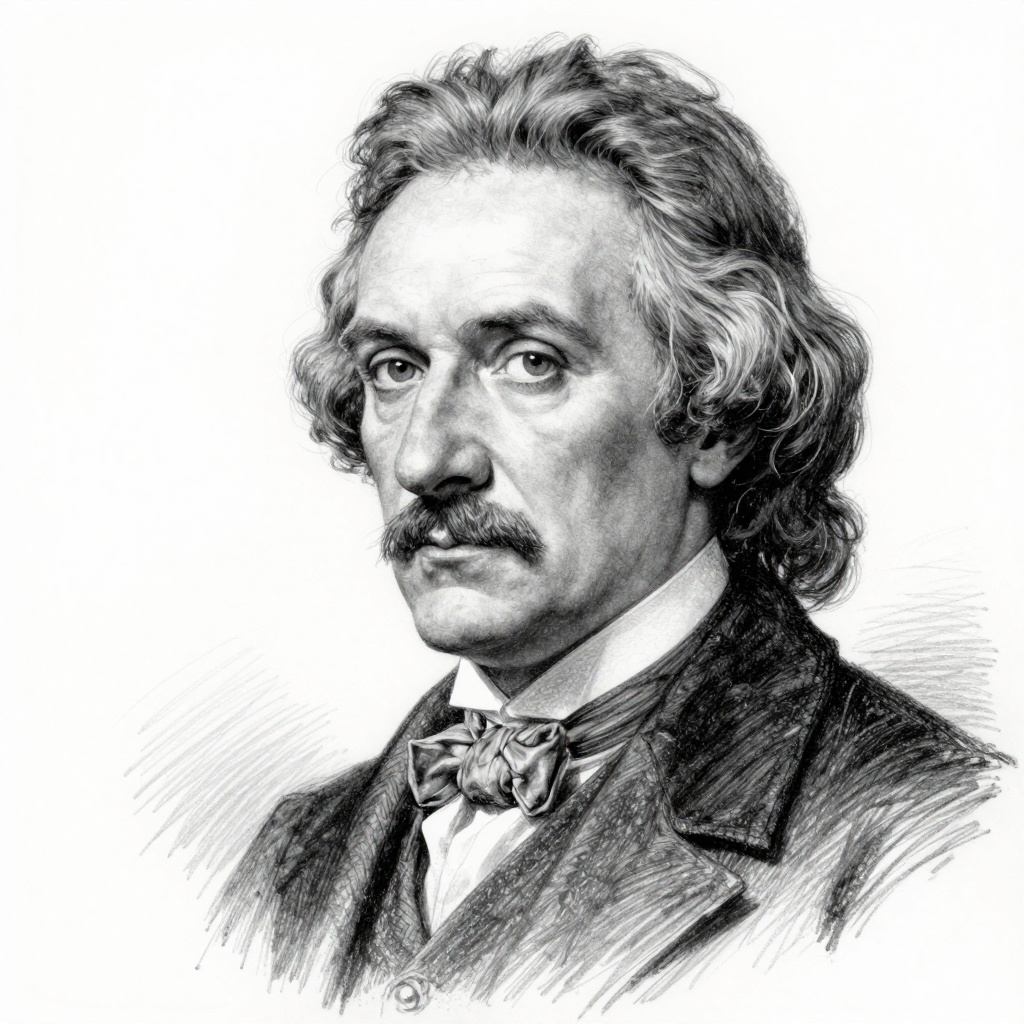
Comments